🧩 Puzzle
The 2016-2022 Yellow Fever (YF) wave was unprecedented. It breached historical barriers, spreading from the Amazon through the Cerrado and into the densely populated Atlantic Forest.
The Critical Question:
"How did the virus persist through temperate winters and high-altitude regions (< 16°C) that should have stopped transmission?"
🌡️ Hypothesis
We propose that anomalous weather conditions (climate change & variability) created temporary bridges for viral survival.
- ▶ Warmer Winters: Prevented viral die-off in historically cold zones.
- ▶ Altered Rainfall: Sustained vector populations during dry seasons.
Background
Temperature anomalies are the biological constraints of the virus.
Viral Incubation Speed
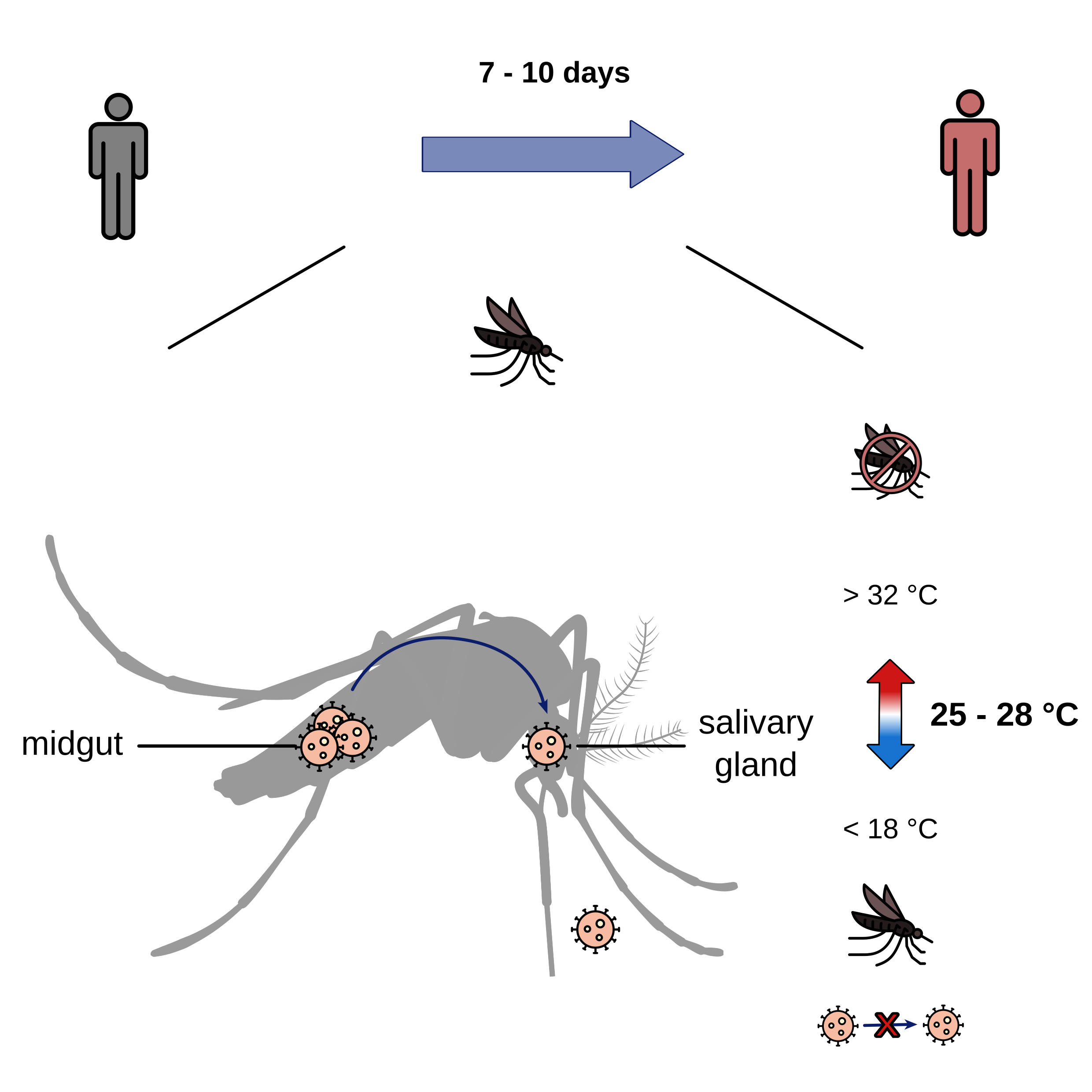
The viral incubation speed depends on termperature conditions.
Transmission Potential (R0)
Peak risk is at ~25.1°C. Climate anomalies pushed cold regions into this "danger zone".
Temperature Anomalies (2016-2022)
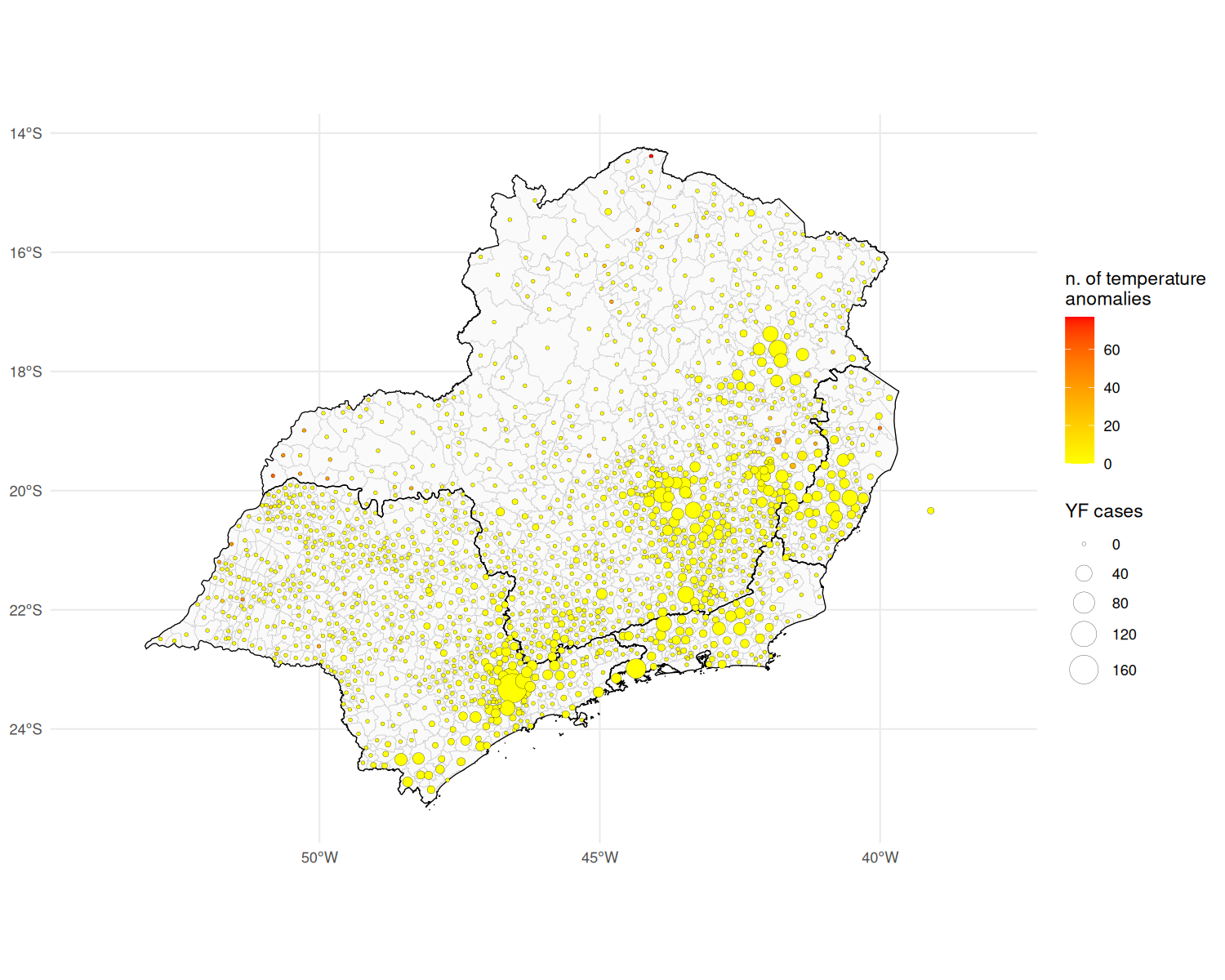
Regions that experienced significant warming during the YF outbreak period.
🎯 Objectives & Methods
Building a comprehensive database linking NHP epizootics with fine-scale climate data (Temp, Rain, Wind, Vegetation).
Identifying "Thermal Corridors" and analyzing how microclimates allowed viral persistence during winter.
Developing a model using climate indicators as "early warning" signals for future outbreaks.
Scientific Challenges
Sampling Bias
Dead monkeys are only found where people look.
Solution: Citizen Science & "Observer Bias" Covariates.
Microclimate vs. Macroclimate
Satellites miss the warm tree hollows where mosquitoes hide.
Solution: Topographic Downscaling & Data harmonization.
Relevance & Impact
- 🚀 Proactive Surveillance: Moving from reactive monitoring to early warning.
- 🛡️ Public Health: Enabling vaccination campaigns in advance.
- 🌍 Scalability: A framework replicable for other vector-borne climate-sensitive diseases.
Partners & Funding
FIOCRUZ • Pasteur Network • USP • Rockefeller Foundation • IOP of Hong Kong • Climate & Health Observatory